DIY Website vs. Hiring Someone: The Real Cost Breakdown for Service Businesses
Building your own website isn't free — it costs 40–100 hours of your time. Hiring someone costs more upfront but converts visitors at 2–3x the rate. Here's the honest math on both sides.

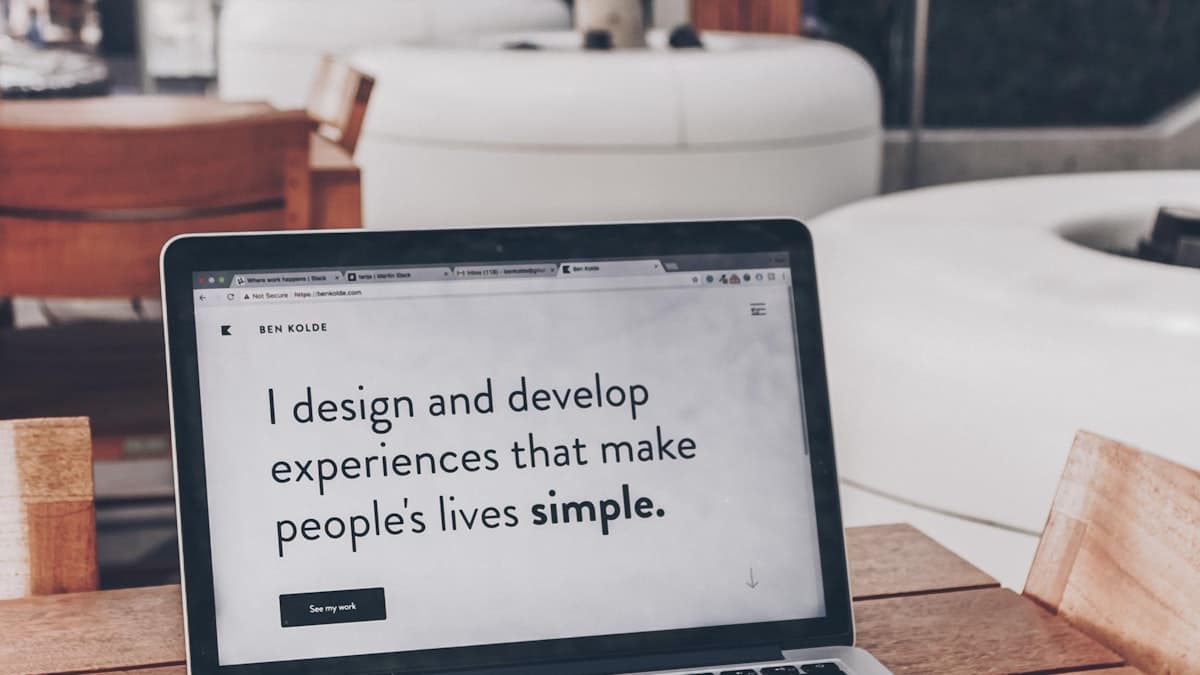
Photo via Unsplash
Quick Summary
Building your own website on Wix or Squarespace isn't free. It costs 40 to 100 hours of your time, plus $17 to $39 a month, and you'll still need to maintain it yourself. Hiring someone costs more upfront but saves you time, gives you a better result, and usually pays for itself faster than you think.
Key takeaways:
- DIY platforms aren't free. They cost $200 to $470 per year plus 40 to 100 hours of your time
- The biggest hidden cost of DIY isn't money. It's the weekends you spend fighting your website instead of running your business
- A professionally built website typically converts visitors to calls at 2 to 3 times the rate of a DIY site
- DIY makes sense if you're pre-revenue and have more time than money
- Hiring someone makes sense once missed calls and missed customers cost more than the website itself
This is one of those questions that gets a lot of strong opinions online and not a lot of honest math. So let's do the math.
If you run a service business (plumbing, landscaping, cleaning, HVAC, contracting, salon, you name it) and you're trying to decide whether to build your own website or pay someone to do it, the answer depends on exactly two things: what your time is worth and what a new customer is worth. Everything else is noise.
We're not going to tell you that DIY is a waste of time. For some businesses, it's the right move. We're also not going to pretend that hiring a web developer is always worth it. For some businesses, it's too early. What we are going to do is lay out the real numbers so you can decide for yourself.
What DIY Actually Costs (It's Not Just $17 a Month)
Platforms like Wix, Squarespace, and WordPress are marketed as affordable alternatives to hiring a developer. And on paper, they are. Wix's most popular plans range from $17 to $39 per month. Squarespace is similar. WordPress itself is free, but hosting runs $5 to $30 a month depending on the provider.
So the dollar cost is somewhere between $200 and $470 per year. That's real, and it's genuinely affordable for most businesses.
But the dollar cost is the smallest part of the expense.
The time cost is where DIY gets expensive.
Industry estimates consistently put DIY website builds for small businesses at 40 to 100 hours. That's not 40 hours of creative, enjoyable work. That's 40 hours of choosing templates, fighting with drag-and-drop editors, Googling "how to add a contact form in Wix," realizing your site looks different on your phone than on your laptop, trying to figure out why your pages load slowly, and starting over at least once because the template you picked doesn't actually do what you need.
One web development professional put it plainly: even for a simple site, most people should expect 20 to 40 hours, and that's if you're already somewhat familiar with the tools. If you're new to it, double or triple that estimate.
For a service business owner billing at $50 to $150 an hour for their actual trade, those 40 to 100 hours represent $2,000 to $15,000 in time. Time you could have spent on jobs, on estimates, on marketing, on your family.
And that's just the build. Maintenance is ongoing.
The ongoing cost nobody warns you about:
Once your DIY site is live, you're also your own IT department. Plugin updates that break things, layout issues after platform updates, speed problems, contact forms that stop sending emails, domain renewals, SSL certificates. Budget 3 to 5 hours a month for this if nothing goes wrong. More when something does.
What Hiring Someone Actually Costs
"Hiring someone" can mean very different things, so let's break it down:
A budget freelancer ($300 to $1,000) usually gives you a template-based build. Looks decent, not optimized for conversions. A mid-range developer or small agency ($1,500 to $5,000) builds a custom site designed for your business, with SEO, mobile optimization, and a layout that's meant to generate calls. A large agency ($5,000 to $20,000+) adds full branding, content strategy, and ongoing marketing, which is overkill for most local service businesses.
For the typical service business, the sweet spot is that $1,500 to $5,000 range. You get a site that's built right, loads fast, and is designed to turn visitors into customers. And you get it in one to two weeks instead of three to six weekends.
The Comparison Nobody Makes: Cost Per Customer
Stop thinking about the cost of the website. Think about the cost per customer it generates.
A DIY site at $350/year plus 60 hours of your time ($4,500 at $75/hour) with a 3% conversion rate on 200 monthly visitors gives you about 72 leads in year one. That's roughly $67 per lead.
A professional site at $3,000 plus $100/month maintenance, designed for a 7% conversion rate on those same 200 visitors, gives you about 168 leads in year one. That's roughly $22 to $25 per lead.
Same total dollars. More than twice the leads. Less than half the cost per lead. And in year two, the math gets even better because you're not rebuilding anything.
When DIY Makes Sense
You're pre-revenue or just starting out. If you haven't landed your first few customers yet, spending $3,000 before you've proven the business model doesn't make sense. Put up a simple site, get your Google Business Profile running, start collecting reviews. Invest in a real site once you have cash flow.
You actually enjoy it. Some people find tweaking templates energizing. If that's you, a DIY site can work well.
It's a side project for now. If this isn't your full-time income, a $17/month site is a reasonable way to test the waters without a big commitment.
You need something live tomorrow. No web presence at all? A DIY site is faster to launch than hiring someone. Get something up now. Replace it later.
When Hiring Someone Makes Sense
Your time is worth more than the cost of the site. If you bill $75 an hour and a DIY build takes 60 hours, that's $4,500 in opportunity cost. Hiring someone for $3,000 saves you money and gives you a better product.
You're getting traffic but not enough calls. If people are finding your business but not converting, the problem is almost always the website. A professional can fix conversion issues that a DIY builder can't.
Your DIY site is stuck at 80%. This is the most common scenario we see. Someone started a site six months ago. The homepage looks okay. The other pages are empty. The contact form might not work. The mobile version looks weird. Every weekend they tell themselves they'll finish it and every weekend something else comes up. That site isn't almost done. It's stalled. And every week it sits there half-finished is a week your competitors' finished sites are getting the calls.
You want to own what you've paid for. With DIY platforms, you don't own your website. You rent it. If Wix changes their pricing, discontinues a feature, or goes down, your site goes with it. You can't export a Wix site and move it somewhere else. With a custom-built site, you own the code. You can host it anywhere, modify it, hand it to a different developer. It's your asset, not a lease.
The Question That Actually Decides This
Forget the features comparison. Forget which platform has better templates. The question is this:
What is one new customer worth to your business?
If the answer is $500 (a typical residential service job), then a website that generates even two additional customers per month has paid for itself within the first month or two. At that point, the question isn't whether you can afford a professional website. It's whether you can afford not to have one.
If the answer is $50 (maybe you're selling low-cost products or just starting out), then DIY makes more sense until your average customer value goes up.
The math isn't complicated. It just requires being honest about the numbers.
Not Sure Which Route Is Right for You?
Our free assessment shows you exactly how your current web presence stacks up. Whether you built your site yourself, hired someone five years ago, or don't have one at all, you'll see where you stand in 3 minutes.
- Get a score out of 100 for your overall online presence
- See specific gaps that are costing you leads
- Find out what to prioritize first, whether you decide to DIY or hire someone
No sales call. No pressure. Just clarity.
Or if you already know you're ready for a professional site, check out our plans at telnorawebstudio.com/#pricing. We build custom websites for service businesses, you own the code, and we can usually have you live in two weeks.
Frequently Asked Questions
It depends on where your business is. If you're pre-revenue, testing a business idea, or have significantly more time than money, a DIY platform like Wix or Squarespace can get you started. But once your business is generating steady income and your time is better spent on your actual trade, hiring a professional typically delivers a better site in less time and generates more leads per dollar spent.

Telnora Web Studio
Your online presence, handled.
We build and manage everything your service business needs online—website, booking, automations, AI receptionist, and local search—so you can focus on your actual business.

You might also like
Online Booking vs. Phone-Only: Which Gets You More Customers?
The way people book services has changed. 46% of appointments are now booked online, and 34% happen after hours. If your business is phone-only, you're missing customers who will never call.
What Happens to a Lead You Don't Follow Up With in 5 Minutes
When someone reaches out to your business, you have about five minutes before your chances of landing that customer drop dramatically. 78% of customers buy from whoever responds first.

Template Website vs. Custom Website: Which One Is Right for Your Business?
Templates are fast and cheap. Custom sites load faster, convert better, and you own the code. Here's the honest breakdown of both — and how to decide which fits your business right now.